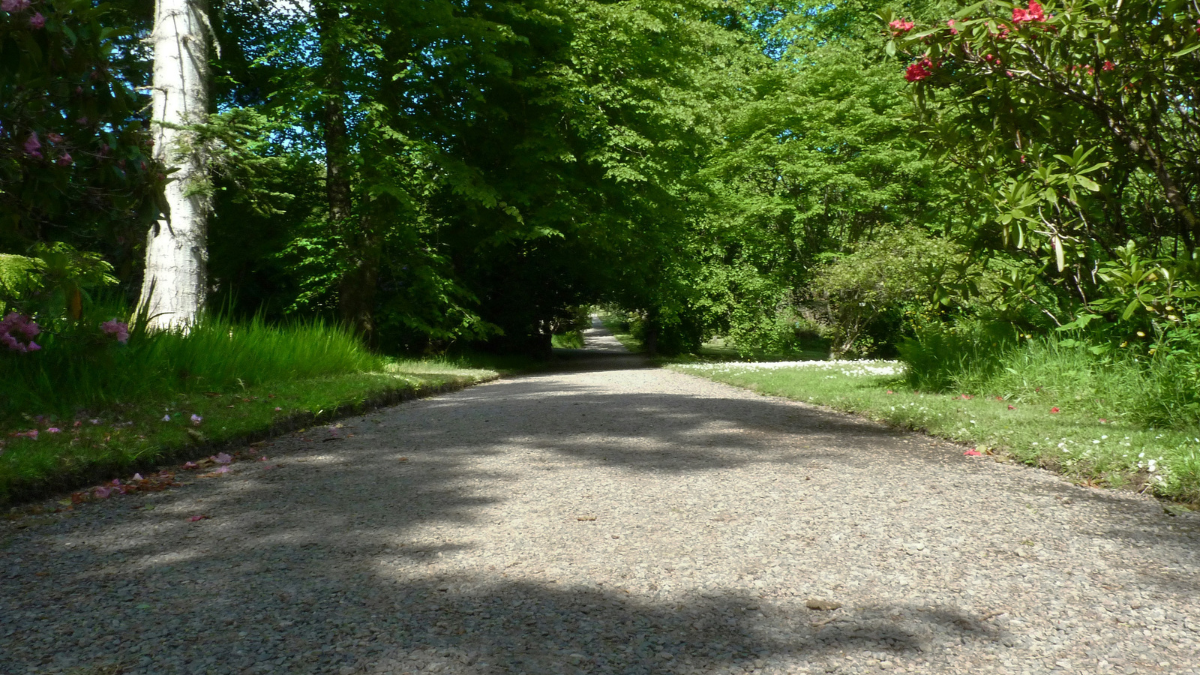
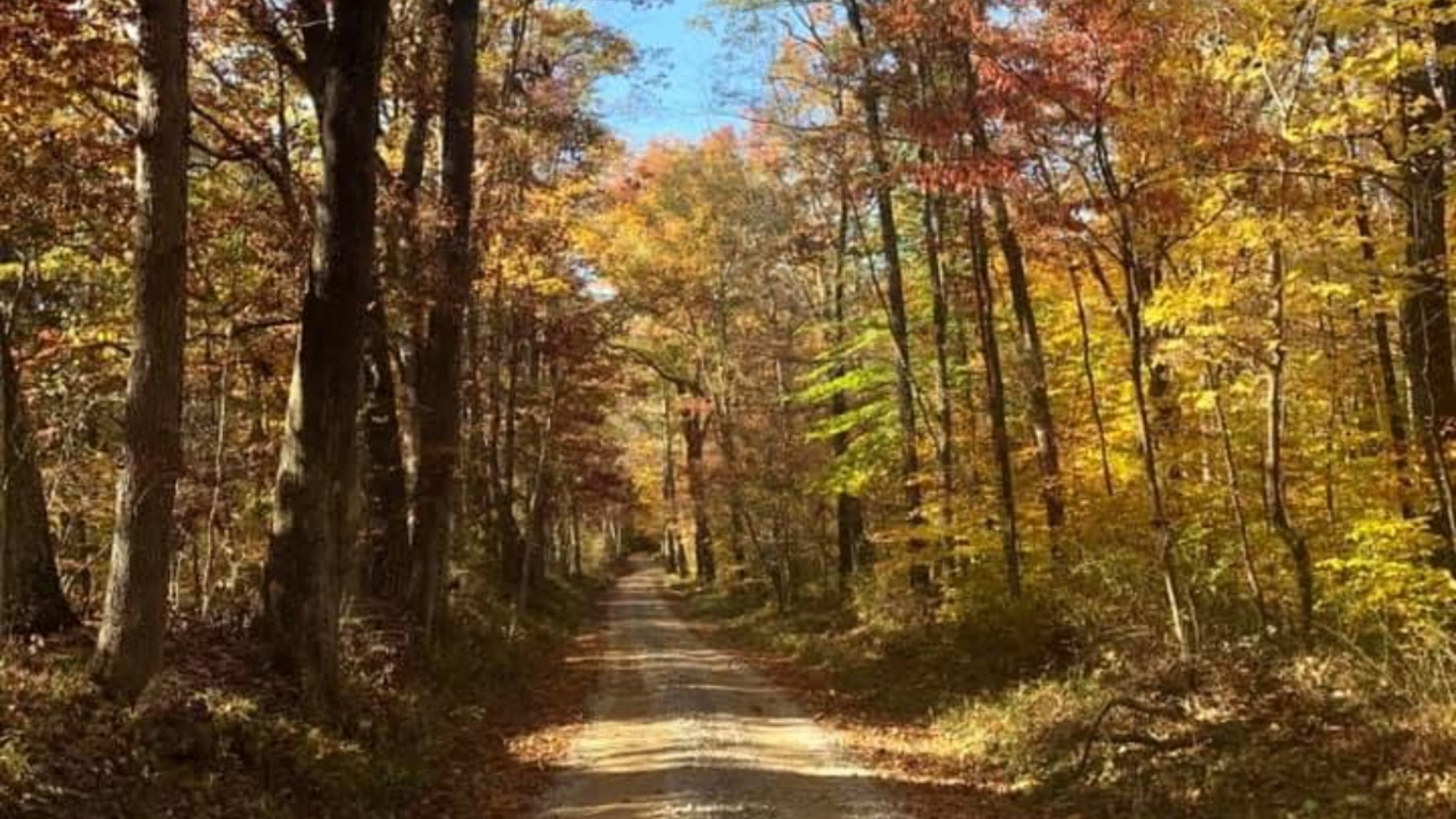
I understand why countless songs have been written about dirt roads. This is ours on a sunny day in the fall, and it is undeniably one of my favorite views ever. This drive is a full sensory experience. The sound of it crunching under our tires, the scent of the air as we climb the long, winding path up and away from the rest of civilization to our own little hideaway in the woods. It makes me swoon just thinking of it.
But this is also our road in spectacular condition. And it doesn’t get that way without annual maintenance by a crew of professionals who really know their business. We have lived on numerous dirt roads in our lives, and the routine care of these charming thoroughfares varies based not only on weather, but also on factors such as soil conditions and topography.
As an upland landowner (or househunter), it is helpful to understand some of the basics regarding maintenance and repairs, even though you’ll need to hire a qualified team to conduct the tasks…unless of course you have a commercial road grader and roller parked in your garage.
“Who you gonna call?”
Your first step and most important step in properly maintaining a dirt road is to identify a good, local company with professionals qualified for the task. This is not something you can do on your own, and it is not work every excavation or construction company will be capable of doing properly. So ask around. Get quotes. And find a team capable of also helping with emergency repairs if/when they become necessary. Our current road (which gains about 500 feet in elevation over the course of approximately 1 mile) is prone to what we call “gullywashers” when we get torrential rains, most often in the late spring and early summer. Even with culverts and proper drainage ditches along the roadside, the rain can be so forceful that nearby brooks and streams become overwhelmed, and water rushes over the road’s surface. This can quickly become an emergency, as it then carves a deep channel (or gully) through the gravel and subsurface soil, rendering it impassable. Having a company we can rely on to help us in a timely fashion is essential.
Regular Maintenance Routines
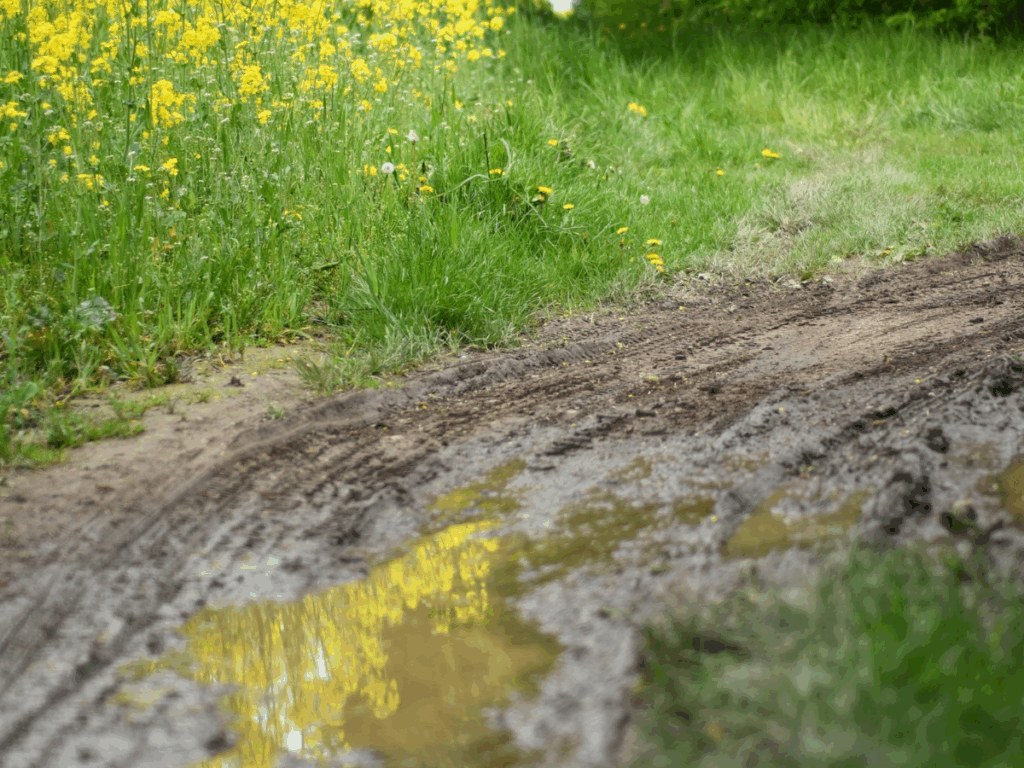
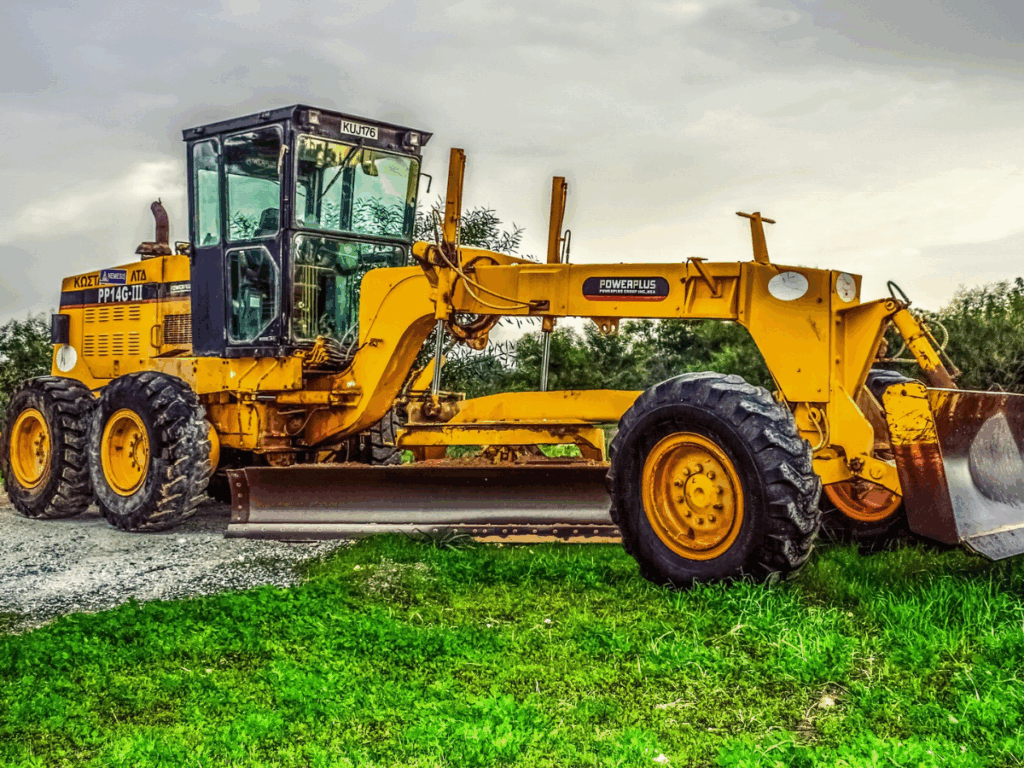
Every dirt road regardless of climate will require some level of annual maintenance. Road become rutted, potholes and washboards can develop, gravel mounds form at the center and the sides, and so on. So work is commonly performed both annually and on an as-needed basis.
The most common, regular maintenance activities include the following:
- Blading & Smoothing: To remove high spots and redistribute materials, this task is performed annually. In snowy, upland climates, it is scheduled for the spring, to clear accumulated materials left by the snowplows. This typically involves a road grader and a roller.
- Grading & Reshaping: To repair the road shape and improve road drainage. This task is typically performed every couple of years to maintain the crown of the road (the slight arch in the middle of every road that allows water to drain to ditches) and involves a high level of expertise. Also involves a road grader and a roller.
- Adding Materials: To resurface the road and/or stabilize gravel by adding binding materials (perhaps clay or lime). These binding materials can also help with dust control (more on this to follow). This can be done annually or as needed, depending on the quality of the base soil, traffic, and/or weather.
- Clearing culverts and ditches: This is an ongoing task, and you should be alert to any obstructions that may cause water to divert onto the road. Clear debris in a timely fashion to prevent costly problems, either on your own or by hiring a contractor. Often, debris simply gathers at the entrance of a culvert and, once cleared, the force of the restored flow of water will dislodge any debris stuck inside. If it is beyond your ability to manage however, contact your road maintenance company and ask them to recommend a drainage contractor who can help.
Dust Control
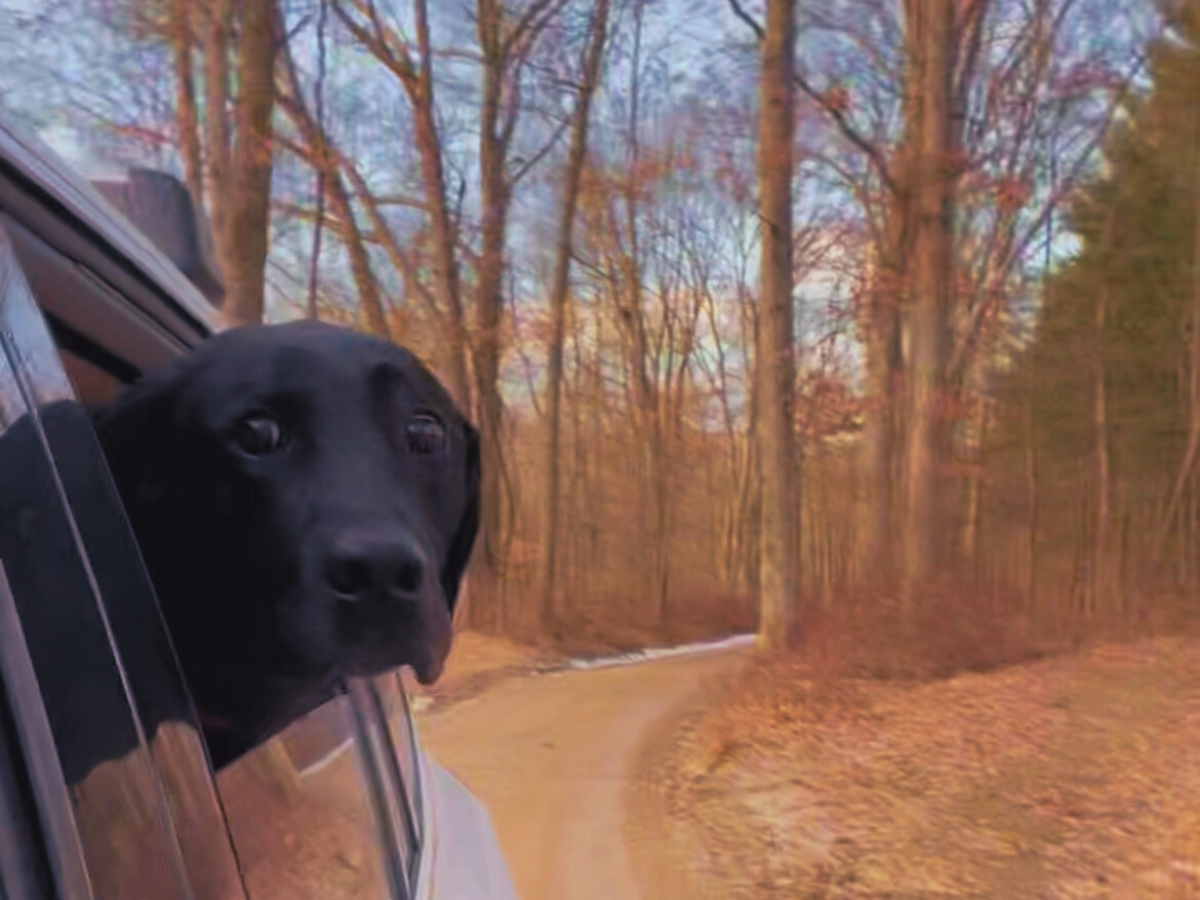
While water can cause its share of headaches on a dirt road, so can that lack of it. Dust in the dry, hot summer months can become a pretty unpleasant occurrence. And in some regions of the country, treating road surfaces to mitigate dust is a common practice–although I’d never heard of it until we lived in Montana.
There are myriad applications for dust control, but water is by far the safest. In the high mountain desert, however, it wasn’t very popular for obvious reasons. This is where we learned about calcium chloride, the most popular application for dust control, and the same treatment used to de-ice roads during the winter. This solution is sprayed onto the road surface using specially equipped trucks. Depending on weather and traffic, this may be applied every month (or perhaps more) during the hottest, driest times of the year.
It is not as popular in rainier climates because 1) water does a decent enough job of controlling dust, and 2) heavy rainfalls wash away the application. So, if you live in an area that is prone to a quick but heavy afternoon shower in the summer? Just rely on H2O to do its work. We have simply resigned ourselves to live with a dusty car for about 5 months of the year. Our friends who do the same laughingly call it “privilege dust” since many of the most beautiful trailheads, stunning estates, and picnic hideaways in our town are at the end of long, dirt roads. We know we’re lucky.
Snow Plow Know-How
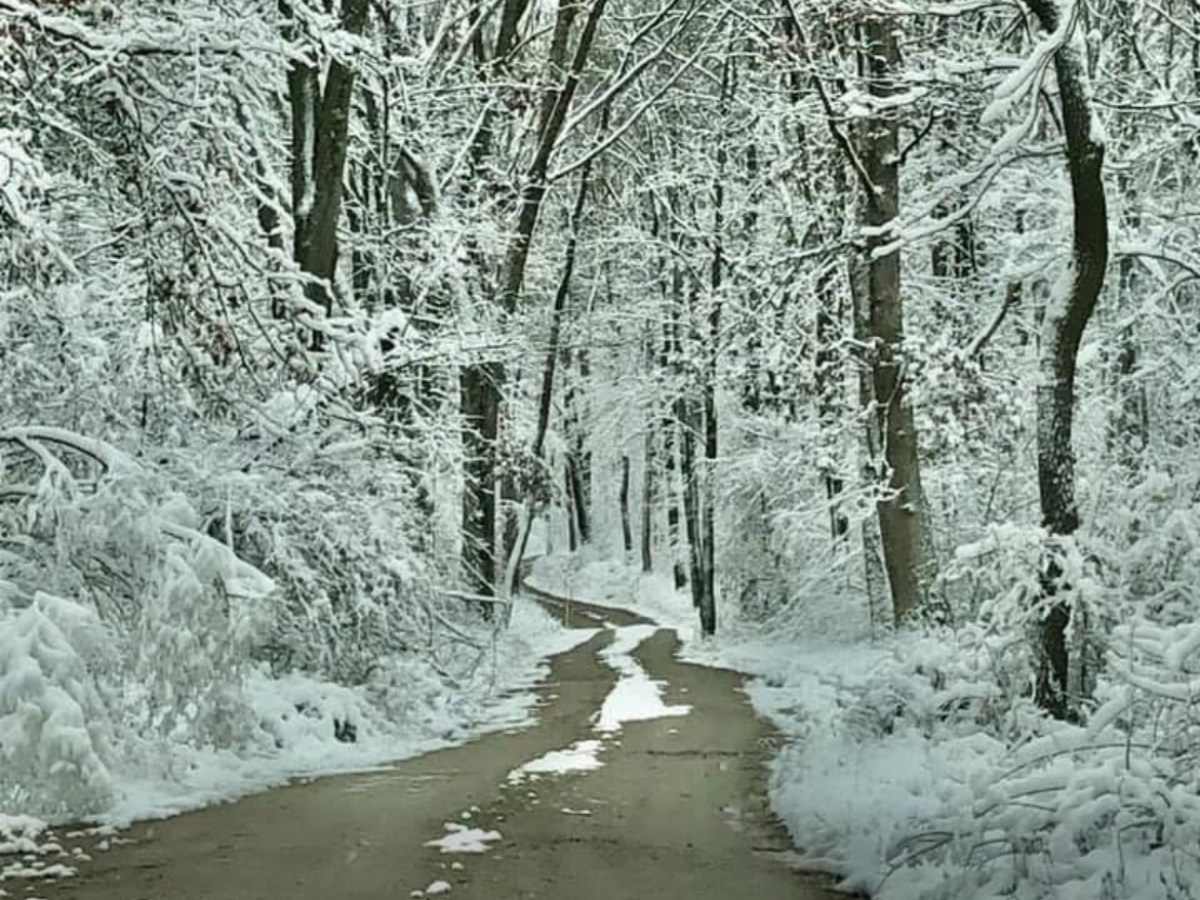
In the uplands, it is important to plan for winter months and the inevitability of needing a snowplow company that can also treat the road surface. Because a snow plow that is set too low can compromise the structure of a dirt road by scraping the surface and destroying the crown, for example, the plow must be raised enough to maintain a snow base of about 1 inch. And don’t under-estimate how slick this 1″ of snow can become after a day or two of traffic and a few freeze-thaw cycles either. You’ll need to ensure that your plow company can also treat your roads so that you have enough traction to climb, turn, start, and stop. The anti-skid treatment we use is simply sand or gravel. We do not use salt because of the environmental impact, because we always have dogs running about, and because we find it’s simply unnecessary.
There are a few areas of our road that we mark for the plow driver in the fall using reflective stakes. During heavy snowfalls, it is understandable that a plow driver working in the dark of an early morning may mistake a patch of lawn for driveway. So help these hard workers out by picking up a bundle of reflective plow guides at your local hardware store or you can order them here. Mark your roads and save your lawns. **Note** A friend reminded me to ensure you drive these stakes into the ground prior to it freezing. This is sage advice. These stakes are fiberglass, and splinters from them are unbearable. This is a painful experience you want to avoid at all costs. In fact, avoid it altogether by wearing proper work gloves when handling them.