Looking forward to long, lazy days curled in front of the fire reading? Or nights gathered by an outdoor fire pit after a hike with friends? You’ll need wood. And lots of it! While gas fireplaces have their place, in our opinion, that place is bedroom where you can simply turn it on or off in the comfort of your PJs. Everywhere else? Log burning fireplaces are the OG of uplands vibe.
There are two ways to procure wood: cut your own (which we’ll detail in a separate post) or buy some from a local. We’ve done both. But the first time buying wood? I knew nothing beyond the terminology “A cord of wood.” This meant absolutely nothing to me and when 1.5 cords of wood were dumped in my driveway upon delivery, I almost panicked. So let me try and make this easier to understand.
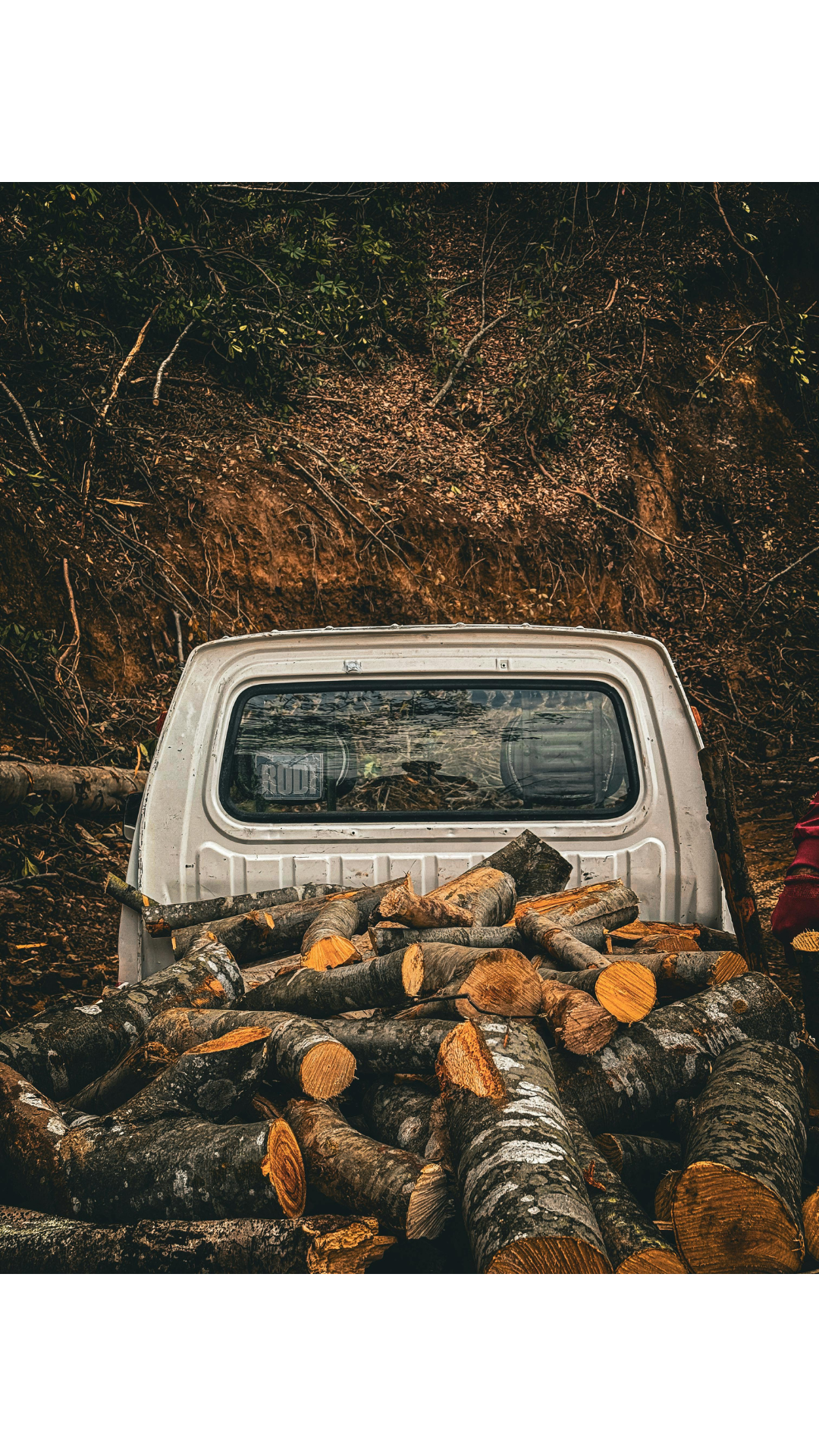
One standard cord of wood is a term used to describe 128 cubic feet of wood (4′ x 4′ x 8′). It is important to understand how this actually looks in the bed of the pick-up truck if you’re buying from a local individual. Typically the wood is split and tossed into the bed of the truck (rather than neatly stacked, which can fit more). This is fine, but it means it will be delivered in multiple loads. Typically an 8′ truck bed holds just over 1/3 of a cord of split logs. So expect 3 deliveries.
Standard logs are usually split and cut to a length of 16″. If your firebox (fireplace interior) is exeptionally small or you have a small woodstove, you’ll need to locate an individual or company who can cut logs to your particular specifications. So be sure to know the length of log you need before you place an order. Take length into account when storing wood as well. If you’re building a cubby next to your fireplace, for example, ensure it is deep enough to house average fireplace logs.
The type of wood you purchase matters and it’s important to ask what you’re buying. The wood should be “seasoned” meaning it has been cut and stored for at least one year. This allows the wood to properly dry and burn more efficiently. High density woods are ideal as they’ll burn hotter, steadier, and slower….which means fewer trips outside to the woodpile! Low resin woods are also better in that they produce less smoke and sparks. Some of our favorite woods include:
- Ash: We use a lot of ash becase of its steady, hot burn and its availability. The Emerald Ash boarer has decimated the Ash population and dead Ash trees are everywhere.
- Maple
- Hickory: May be more difficult to find, depending on your region, but arguably one of the best woods for burning. Fabulous to grill/smoke over too.
- Oak
Storing wood once purchased is important to consider. We typically keep a smaller stack closer to the house and under the porch roof so that it stays dry and accessible. But our primary wood stack is away from the house at an outbuilding, and under a roof. Wood attracts critters. And if you don’t like snakes, chipmunks, and assorted other guests? Stack your wood further away from your main house.
Finally, kindling wood. As important as your fire logs are, your kindling is equally important. It helps your fire start properly by burning quickly and generating enough heat to help ignite larger logs. Kindling should be split into small, thin pieces roughly 1″ in thickness and 8″ in length. And unless you’re experienced with an axe? Buy it. These little pieces are dangerous to cut yourself if you don’t know what you’re doing. Kiln-dried kindling is wonderful due to it’s low moisture content and consistent quality. For safety reasons? We stear clear of kindling treated with accelerants. And we never use pine or other high resin woods in our indoor fireplace (even though we have our chimney professionally cleaned every summer). A good rule of thumb is to never burn anything but dry, quality wood in your fire. You may be saving the landfill by tossing in cardboard boxes or used paper plates, but you’re risking a chimney fire. So start a rule in your upland home and stick to it.
Finally? Be creative with wood-fired cooking. We’ll post a separate article about wood-fired grill designs (ours is a fireplace and grill combo build by my favorite amateur stone mason and father). If you own one or have built a way to do this? You can often buy wood from local tree-fruit farmers for a great price. We contact local apple and cherry farmers at the end of the season and buy old limbs and branches that have fallen from the trees! We use them to wood roast our Thanksgiving turkey outside all day while slurping Bloody Mary’s and nibbling cheese. Not a bad way to enjoy any upland day!